

Noise sits in the background of many workplaces. Over time, teams stop noticing it. Machinery runs, tools operate, environments stay loud, and exposure becomes part of the daily routine. The risk builds quietly. Most employers do not see the damage until an employee report hearing loss, or worse, a claim is raised.
In the UK, this risk is not optional to manage. Under the Control of Noise at Work Regulations 2005, employers hold a legal duty to assess, control, and monitor noise exposure. This includes implementing health surveillance where there is a risk to hearing. Failing to fulfil this duty leads to enforcement action, compensation claims, and long-term harm to employees.
This is where occupational audiometry plays a key role. Workplace hearing tests are not a formality or a one-off check. They act as an early warning system, they help you detect changes in hearing before the damage becomes severe, allowing you to act early and protect your workforce. In this blog, you will understand how noise-induced hearing loss develops, what the law expects from you as an employer, and how to implement practical audiometry testing that protects both your employees and your business.
Key Takeaways:
- What is Noise-Induced Hearing Loss (NIHL)
- Why NIHL is a Serious Workplace Risk
- What is Occupational Audiometry
- When is Audiometry Testing Required in the UK
- What Happens During an Audiometry Test?
- Benefits of Regular Audiometry Testing
- Consequences of Ignoring Occupational Audiometry
- How Healthscreen UK Supports Occupational Audiometry
- Book Workplace Audiometry Testing For Your Team
- FAQs
What is Noise-Induced Hearing Loss (NIHL)?
Noise-induced hearing loss develops when the inner ear becomes damaged due to repeated exposure to high noise levels. This damage affects the tiny hair cells in the cochlea, which are responsible for translating sound into signals for the brain. Once damaged, these cells do not recover.
In simple terms, the louder the environment and the longer the exposure, the higher the risk. Regular exposure to noise above safe limits, even for short periods each day, leads to gradual hearing damage. Employees often do not notice the early stages. Hearing loss builds over time, making early detection difficult without proper testing.
One of the most serious aspects of NIHL is its permanence. Unlike some other workplace health risks, hearing damage cannot be reversed. Once a loss occurs, the focus shifts from prevention to management, placing a long-term burden on both the employee and the employer. In the UK, several industries face a higher risk due to consistent noise exposure:
- Construction sites use heavy machinery and power tools.
- Manufacturing environments with continuous equipment noise.
- Engineering settings with drilling, cutting, and fabrication processes.
- Logistics and warehousing operations with vehicles and mechanical handling equipment.
These environments demand proactive monitoring. Without regular workplace hearing tests and structured health surveillance, early signs of damage go unnoticed until the impact becomes significant.
Why NIHL is a Serious Workplace Risk
Noise-induced hearing loss remains one of the most reported occupational health issues in the UK. According to the Health and Safety Executive, thousands of workers continue to suffer from work-related hearing problems each year, largely due to prolonged exposure to high noise levels. The impact on employees goes beyond hearing alone. NIHL affects how people communicate, especially in busy or high-risk environments. Employees struggle to hear instructions, warnings, or conversations. This leads to frustration, isolation, and in some cases, mental health concerns due to reduced interaction at work.
From a safety perspective, the risk increases significantly. When employees cannot hear alarms, signals, or verbal instructions, the chance of accidents rises. In industries such as construction or manufacturing, this creates a direct threat to workplace safety. There is also a clear impact on productivity; miscommunication leads to errors, delays, and rework. Teams take longer to complete tasks, and overall efficiency drops. Over time, this affects operational performance. For employers, the financial impact builds quickly:
- Compensation claims for occupational hearing loss
- Increased sickness absence or long-term health issues
- HSE investigations and enforcement action
- Potential fines for non-compliance with noise regulations
NIHL is preventable; however, without structured monitoring and control measures, the cost of ignoring it becomes far greater than the cost of managing it.
What is Occupational Audiometry?
Occupational audiometry refers to hearing tests carried out as part of workplace health surveillance. These tests measure an employee’s ability to hear sounds at different frequencies and volumes, helping identify early signs of hearing damage caused by noise exposure. Workplace hearing tests are simple, non-invasive, and carried out using specialist equipment in a controlled environment. Employees wear headphones and respond to a series of tones. The results are recorded and compared over time to detect any changes in hearing levels. A structured audiometry programme usually includes:
- A baseline test for new employees exposed to noise
- Periodic tests at set intervals based on risk level
- Ongoing comparison of results to track any decline in hearing
Baseline testing sets a clear reference point. It shows the employee’s hearing level before exposure begins. Periodic testing then tracks any changes, allowing early action if deterioration is identified. The results of audiometry testing indicate whether hearing remains stable or if there are early signs of damage. Even small shifts in hearing thresholds matter. They act as warning signs, prompting employers to review controls, improve protection, or adjust working conditions. The key benefit is early detection. Instead of reacting to permanent damage, employers take action at the first sign of risk. This protects employees and supports compliance with UK health and safety standards.
When is Audiometry Testing Required in the UK?
In the UK, audiometry testing is guided by the Control of Noise at Work Regulations 2005. These regulations place a legal duty on employers to manage noise risks and protect employees from hearing damage. The regulations define clear action levels based on daily or weekly noise exposure: the lower action level is 80dB, and the upper action level is 85dB.
At 80 dB, employers must assess risk, provide information, and make hearing protection available. At 85 dB, the duty increases. Employers must take active steps to reduce exposure, enforce hearing protection use, and introduce health surveillance. Audiometry testing becomes necessary where there is a clear risk to hearing. This usually applies when employees work at or above the upper action level, or where exposure remains consistent over time even if it fluctuates.
When employees are exposed at or above the lower action level, employers must assess the risk and provide information and training. When exposure reaches the upper action level, stronger controls are required, including hearing protection and health surveillance. Audiometry testing becomes essential when there is a risk to hearing, especially at or above the upper action level. At this stage, employers must implement a structured health surveillance programme, which includes regular workplace hearing tests. Employers must act when:
- Noise exposure meets or exceeds legal action levels.
- There is a known risk of hearing damage.
- Employees report hearing-related symptoms.
- Existing controls do not fully reduce exposure.
Health surveillance, including audiometry, supports early identification of hearing damage. It allows employers to review noise controls, improve protective measures, and ensure ongoing compliance with legal requirements. Taking action at the right time protects employees and reduces the risk of enforcement actions, claims, and long-term health impacts.
What Happens During an Audiometry Test?
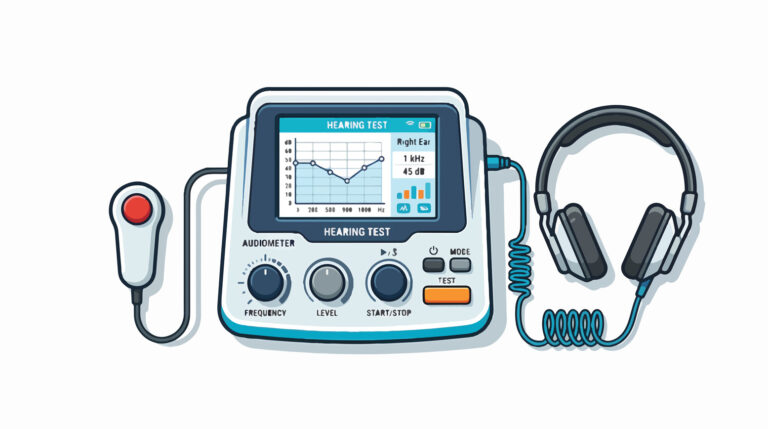
Audiometry testing follows a structured, straightforward process designed to accurately assess hearing. The process starts with pre-test checks. The clinician reviews the employee’s history, checks for recent noise exposure, and ensures the ears are clear. In some cases, earwax or temporary conditions may affect results, so these are addressed before testing.
The hearing test is then conducted in a controlled setting, with the employee wearing headphones and listening to a series of tones at different frequencies and volumes. Each time a sound is heard, the employee responds, and this helps map hearing ability across a range of pitches. Once the test is complete, the results are analysed and recorded. The clinician compares the findings with previous tests or baseline results. Any changes in hearing thresholds are identified and flagged. The full process usually takes around 20 to 30 minutes per employee. It is non-invasive, safe, and requires no recovery time; employees return to work immediately after testing.
Benefits of Regular Audiometry Testing
Regular audiometry testing supports both employee well-being and business compliance. The main benefit is early detection. Hearing damage often develops without clear symptoms in the early stages. Routine testing identifies small changes before they become serious. It also protects long-term employee health by identifying risks early, enabling employers to take action to prevent permanent damage and supporting a healthier workforce over time. From a compliance perspective, audiometry supports requirements set by the Health and Safety Executive. It shows that employers are monitoring risk and taking appropriate steps to protect employees. There is also a clear reduction in legal risk.
With proper health surveillance in place, employers reduce the likelihood of claims related to occupational hearing loss. Over time, this builds a safer workplace culture. Employees become more aware of risks, follow protective measures, and trust that their health is being taken seriously.
Consequences of Ignoring Occupational Audiometry
Ignoring audiometry testing leads to both legal and operational consequences. From a regulatory perspective, failure to manage noise risk can result in enforcement action by the Health and Safety Executive. This includes improvement notices, fines, and in serious cases, prosecution. Compensation claims also increase, and employees who develop hearing loss due to workplace exposure may pursue legal action. These claims often involve long-term costs and reputational impact. The damage to employee health is permanent. Once hearing loss develops, it cannot be reversed, and this affects communication, confidence, and quality of life, both at work and outside.
In real workplace settings, the impact shows in daily operations. Miscommunication increases, safety risks rise, and productivity drops. What starts as an overlooked risk turns into a long-term issue affecting the entire organisation. Taking a proactive approach through regular audiometry testing avoids these outcomes and supports a safer, compliant working environment.
How Healthscreen UK Supports Occupational Audiometry
At Healthscreen UK, audiometry testing is delivered as part of a structured, compliance-led approach to workplace health. You have the flexibility to choose how services are delivered. Testing takes place either on-site at your workplace or at dedicated clinic locations. On-site testing reduces disruption and supports higher employee attendance, especially in operational environments.
Each programme is tailored to your risk profile. This means your audiometry schedule, frequency of testing, and reporting structure align with your specific noise exposure levels and workforce needs. There is no one-size approach. All testing is carried out by qualified professionals with experience in occupational health. This ensures accurate results, clear interpretation, and appropriate follow-up where needed.
Healthscreen UK provides coverage across the UK, supporting businesses of all sizes, from single-site operations to multi-location organisations. A key part of the service is compliance-focused reporting. You receive clear, structured reports that help you: identify early signs of risk, track employee hearing over time, meet legal documentation requirements, and take informed action to improve workplace controls. This approach supports both employee protection and regulatory compliance without adding complexity to your operations.
Book Workplace Audiometry Testing for Your Team
Noise exposure does not reduce on its own. Without regular monitoring, risks continue to build over time. Booking workplace audiometry testing gives you a clear view of your employees’ hearing health and helps you take action before damage becomes permanent.
Early testing supports compliance with UK regulations, reduces the risk of claims, and protects the long-term well-being of your workforce. If your employees are exposed to workplace noise, now is the time to act. Book your occupational audiometry programme with Healthscreen UK and take a proactive step towards a safer, compliant working environment.
FAQs
Q. What is the purpose of occupational audiometry?
Occupational audiometry helps monitor employees’ hearing over time. It identifies early signs of noise-related damage, allowing employers to act before hearing loss becomes permanent. It also supports compliance with UK workplace health and safety regulations.
Q. How often should workplace hearing tests be carried out?
The frequency depends on the level of noise exposure and risk. Most employees in high-noise environments require a baseline test followed by annual checks. In higher-risk settings, more frequent testing may be recommended as part of a structured health surveillance programme.
Q. Is audiometry testing a legal requirement in the UK?
Audiometry testing forms part of health surveillance under the Control of Noise at Work Regulations 2005. It becomes necessary when there is a risk to hearing, especially when employees are exposed to noise at or above the upper action level.
Q. What noise level requires hearing tests at work?
Hearing tests are typically required when noise exposure reaches 85 dB or higher, known as the upper action level. At this point, employers must provide health surveillance, including regular audiometry testing, to protect employee hearing.
Q. Can noise-induced hearing loss be reversed?
No. Noise-induced hearing loss is permanent. Once damage occurs, it cannot be reversed. This is why early detection through workplace hearing tests and effective noise control measures is essential.